
Describe the property
Send the location, symptoms, equipment and access details. State whether the work is a repair, replacement or planned project.
Need plumbing help in Komoka? Tell us about the leak, blocked drain, fixture or water heater. A responding provider will confirm coverage and availability before booking.
Get A Free QuoteCompare tank and tankless options using the unit rating plate, fuel, venting, household demand and available mechanical-room space.
View scopeConsider cabling, hydro-jetting or camera inspection according to the blockage, pipe material and recurring symptoms.
View scopeDocument accessible galvanized, poly-B or copper supply lines and compare replacement routes, including a manifold PEX layout with individual shutoffs.
View scopeCheck fixture specifications against existing connections, and assess capped basement rough-ins for drainage, venting and supply requirements.
View scopeUse photos, timing and meter observations to help plan thermal, acoustic or meter-based checks before selecting access and repair work.
View scopeCompare pump duty and capacity, battery-backup specifications and the discharge route using the pit, equipment label and observed cycling.
View scopeUse water test results and household demand to compare softener capacity, carbon filtration and reverse osmosis options.
View scopeThe right treatment system depends on measured water characteristics, household use and the result you want, rather than the city name alone. For a home in Komoka, consider having the water tested and keep the results for comparing a softener, sediment filter, carbon filtration or reverse osmosis. Note the number of occupants and bathrooms, available installation space and preferred drinking-water point. Ask how equipment capacity, regeneration settings and accessible service points will be determined for the specific supply and household.
Compare tank and tankless options using the unit rating plate, fuel, venting, household demand and available mechanical-room space. Consider cabling, hydro-jetting or camera inspection according to the blockage, pipe material and recurring symptoms. Document accessible galvanized, poly-B or copper supply lines and compare replacement routes, including a manifold PEX layout with individual shutoffs.
Check fixture specifications against existing connections, and assess capped basement rough-ins for drainage, venting and supply requirements. Use photos, timing and meter observations to help plan thermal, acoustic or meter-based checks before selecting access and repair work.
Compare pump duty and capacity, battery-backup specifications and the discharge route using the pit, equipment label and observed cycling. Use water test results and household demand to compare softener capacity, carbon filtration and reverse osmosis options.
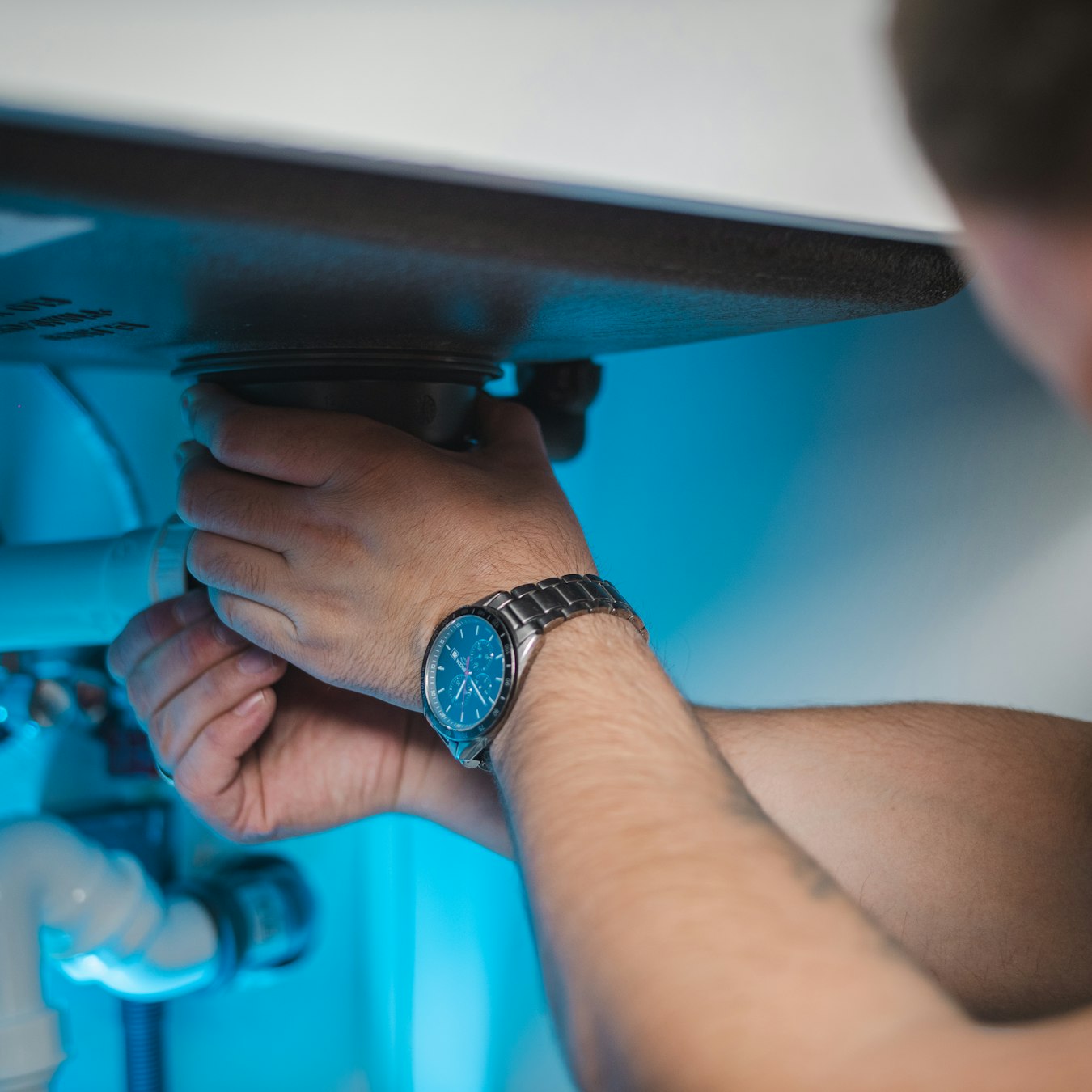
A drain backup can call for a cable, hydro-jetting, camera inspection or a combination, depending on the blockage and pipe condition. For a job in Komoka, note which fixtures are affected, when the problem occurs and whether it returns after clearing. If the property has newer plastic laterals, construction debris may be worth checking; if it has older clay or other jointed pipe near mature trees, ask whether roots or pipe damage should be assessed. Camera findings help distinguish maintenance from repair needs.
Explore this serviceSend the location, symptoms, equipment and access details. State whether the work is a repair, replacement or planned project.
The request is reviewed so the responding provider can clarify the work, property access and service coverage.
Agree the provider identity, qualifications, written scope, pricing and visit window directly. Sending a form does not confirm an appointment.
Count bathrooms and fixtures, and consider whether a basement suite or other addition is in regular use. Ask how the proposed tank capacity or tankless recovery rate matches peak demand. Comparing those details helps avoid selecting equipment based only on the home’s original layout or an assumed household size.
If the basement has capped laundry or bathroom plumbing, photograph the caps and surrounding area and ask what remains to make the connections usable. Confirm whether drainage, venting and water-supply work are required for the intended layout. A rough-in is not necessarily a complete installation, and its location can affect the scope.
If a home has tight joist spaces, finished ceilings or past renovations, photograph accessible routes and note areas that cannot be opened easily. Ask how the new piping would be routed and where access may be needed. These conditions can affect labour, finish restoration and the practical layout of a replacement system.
Ask whether thermal imaging and acoustic checks suit the suspected leak and the construction of the affected area. These methods can help narrow the search through finished surfaces, but findings should guide a careful access plan rather than promise a precise result. Share photos and the stain’s timing to help compare likely investigation steps.
If the pump cycles frequently or the pit receives steady inflow, record the pattern and ask how the proposed pump’s duty rating and capacity will be matched to the load. A cast-iron pump may be one option to compare with existing equipment. Pit dimensions and inflow observations can change equipment selection, so avoid relying on a label alone.
Use the form to describe the property, the symptoms and the work requested. For Kilworth, Delaware, London, Strathroy, include your postal code so local coverage can be checked.